
A RESTORATION JOURNAL

The first rescue
is the airplane.
One Learjet 24, the hands that know her, and the work of bringing her back.

A classic.
A comeback.
One airplane. A shared history.
A return to service, one careful step at a time.
Some things
are worth
bringing back.
A Learjet 24, with a lot of life behind her.
And another chapter ahead.
Tip tanks. A T-tail. The compact shape that makes the Lear 24 unmistakable.
This journal follows the Lear 24’s restoration: what we find, what needs work, and the people helping bring her back.
The first rescue is the airplane. The history comes with her. Meet Bill Lear.
MODEL 24 / EXTENDED RANGE
The Lear 24. The XR chapter.
Our project is a Learjet 24 with the later XR—Extended Range—modification. Dee Howard’s work added another chapter to the Model 24’s history.
Read the XR chapterThe Model 24, in three views
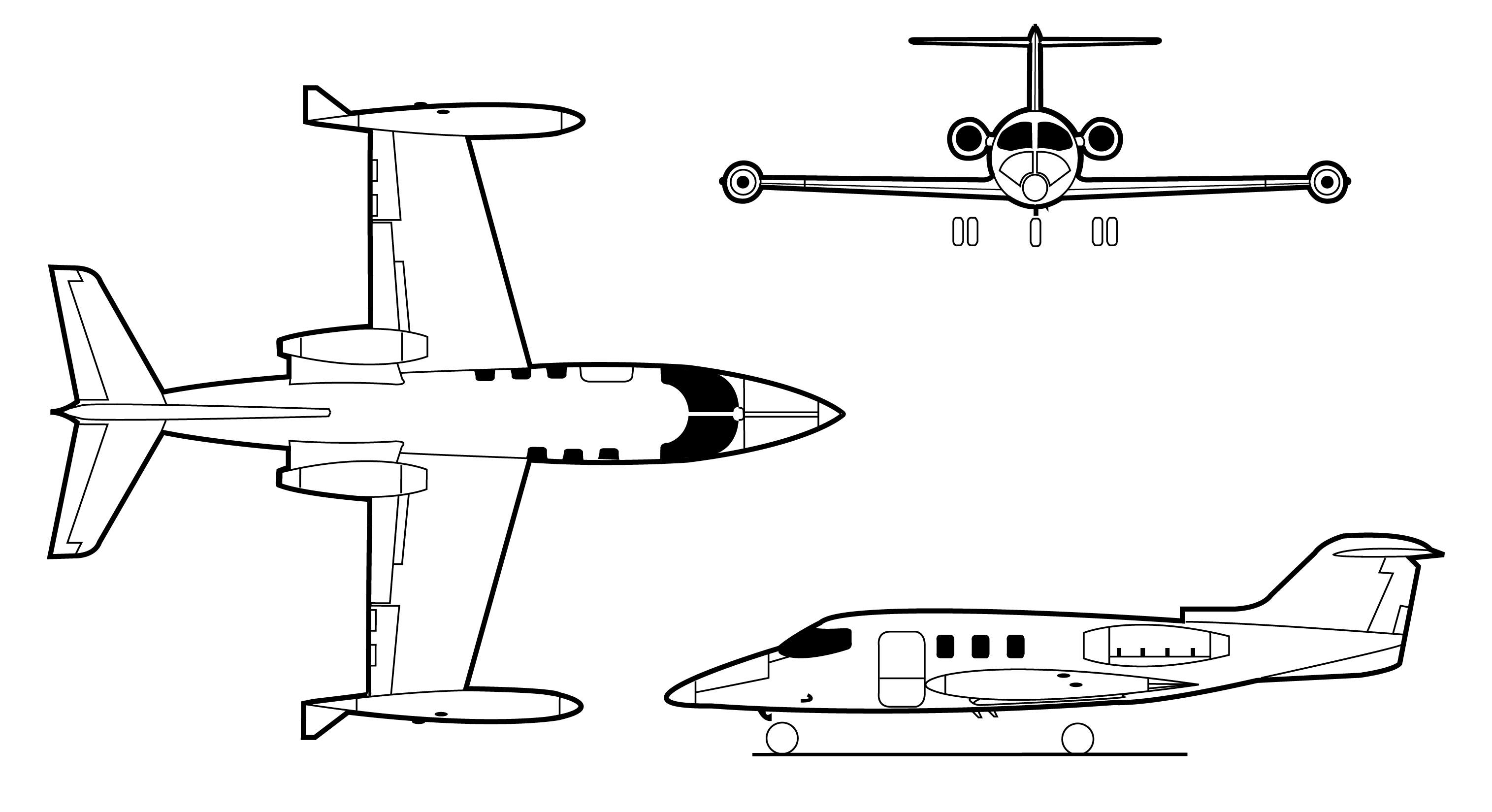
A spotter’s guide. Look for the fuel tanks at the wingtips, the high T-tail, and the two engines beside the rear fuselage.
Inside the Lear 24
The Lear 24.
Under the skin.
Explore the Lear 24’s airframe and systems. Drag to orbit, zoom in, or separate the assemblies.
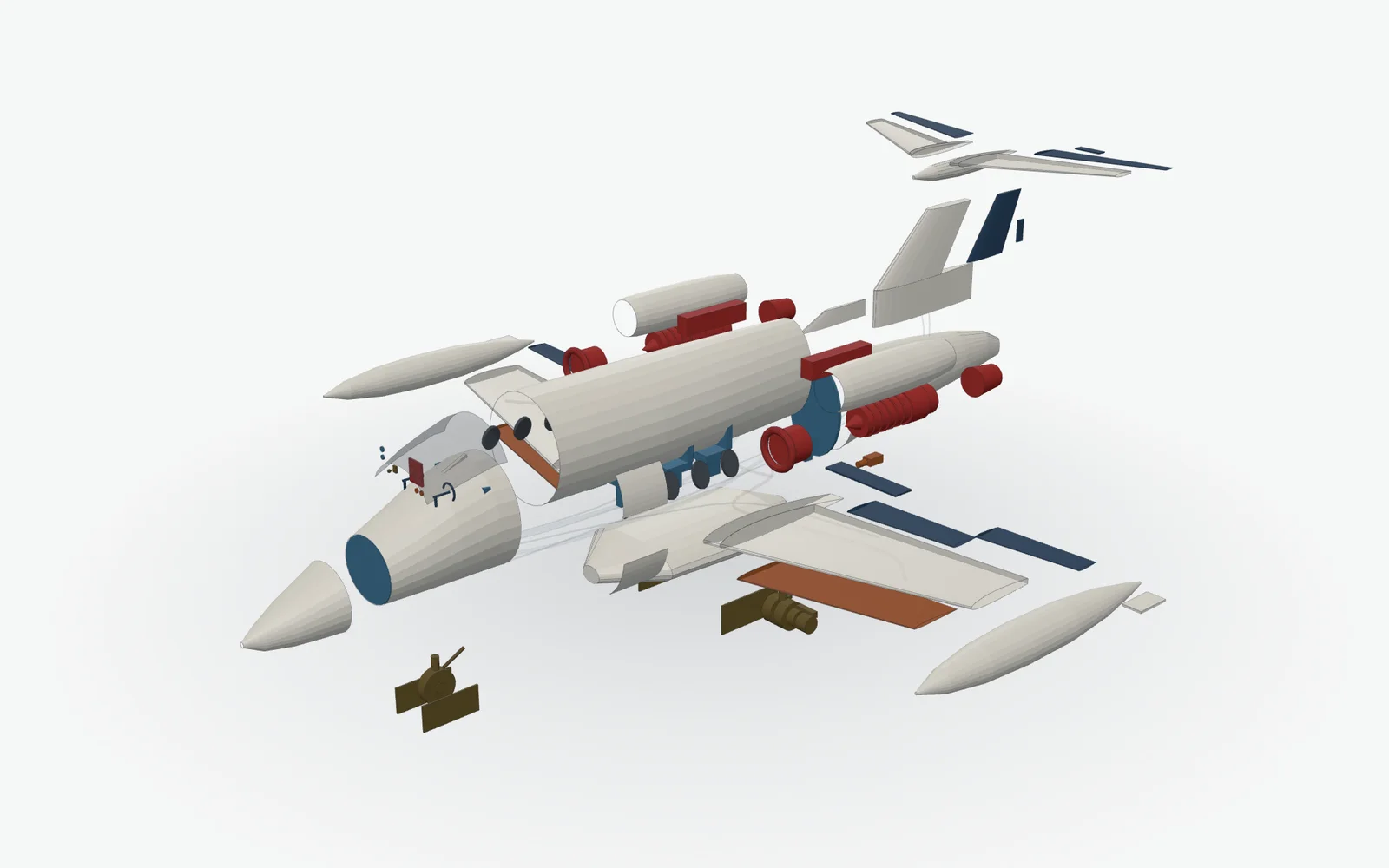
Airframe
The shape of an idea.
The Learjet 24’s low wing, slender fuselage and high tail make it unmistakable. Separate the assemblies to see how that outline fits together.
The human partFor the mechanics, the story continues beneath the skin: joints, access panels and the details a photograph cannot show.
Learjet 24 anatomy study. Assemblies and internal systems are simplified for exploration.
FIGHTER ROOTS.
LEAR SOUL.
Swiss engineering. Bill Lear’s vision.
An unmistakable American original.
THE PEOPLE BEHIND THE MACHINE
SWITZERLAND TO WICHITA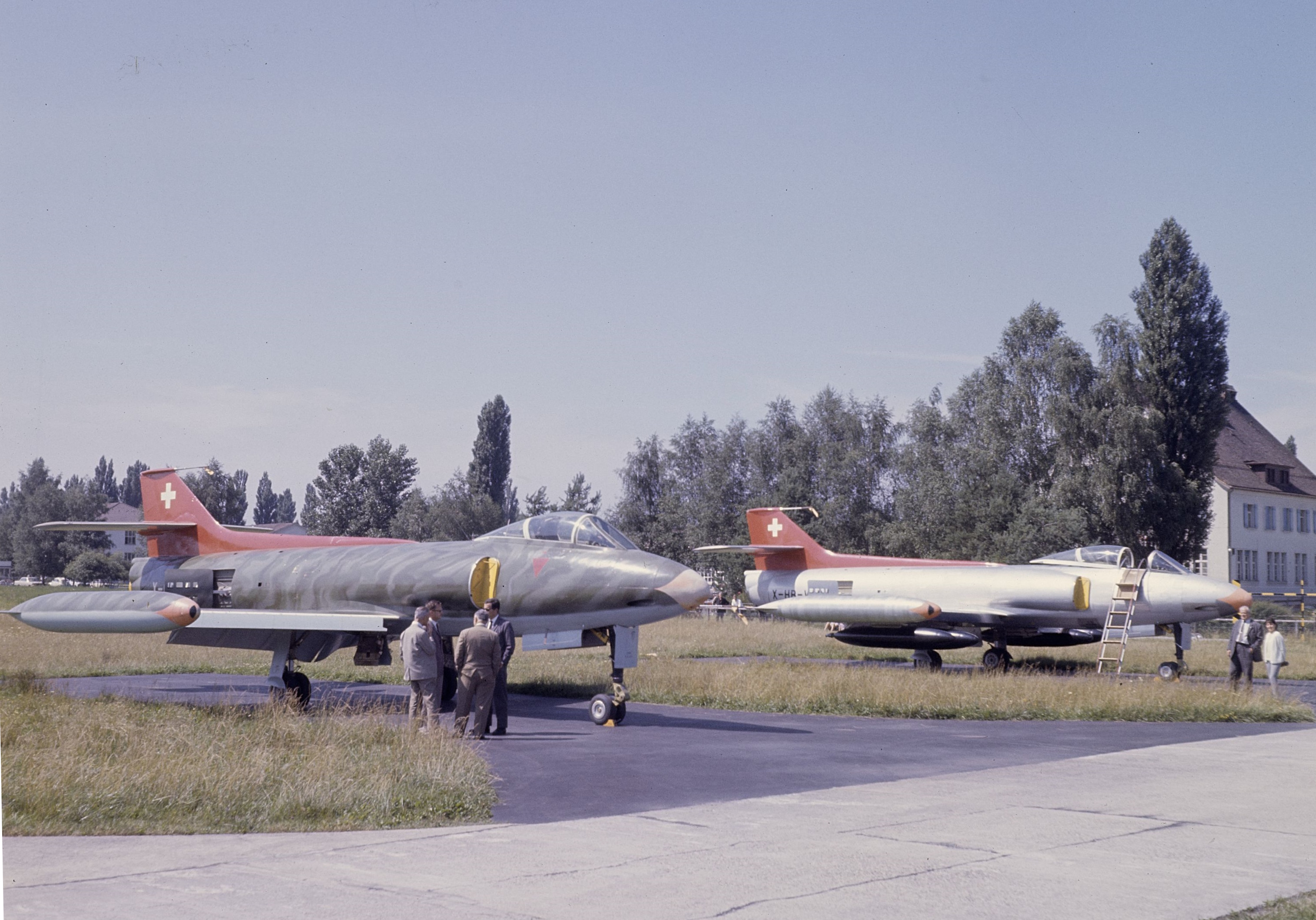
AN INVENTOR’S MIND. AN AIRPLANE’S SOUL.
Bill Lear.
A small jet.
An enormous conviction.
Bill Lear saw a future in which the speed of a jet belonged to more than the airlines. Already an inventor in radio and flight control, he backed his vision for a compact business jet with his own money.
His son Bill Jr., a test pilot, introduced him to the Swiss P-16. Lear recruited its designer, Hans Studer; some of the fighter’s wind-tunnel data helped shape the Learjet 23. The new airplane gave that research a civilian purpose.
In 1962, Lear moved the project to Wichita. Skilled engineers and aircraft builders turned his conviction into metal. The first Learjet 23 flew on October 7, 1963, beginning the family that would include the Lear 24. His name was on the airplane. A whole crew’s knowledge was inside it.
The Model 23 at The Museum of Flight Meet the man in the Learjet LibraryBefore and beyond the jet RADIO · AUTOPILOTS · 8-TRACK
Lear helped develop the first commercially successful Motorola car radio. Motorola’s history
His F-5 autopilot and automatic approach coupler earned the 1949 Collier Trophy. The award record
The Lear Jet company also developed 8-track players and cartridges. Bill and Moya Lear’s archive
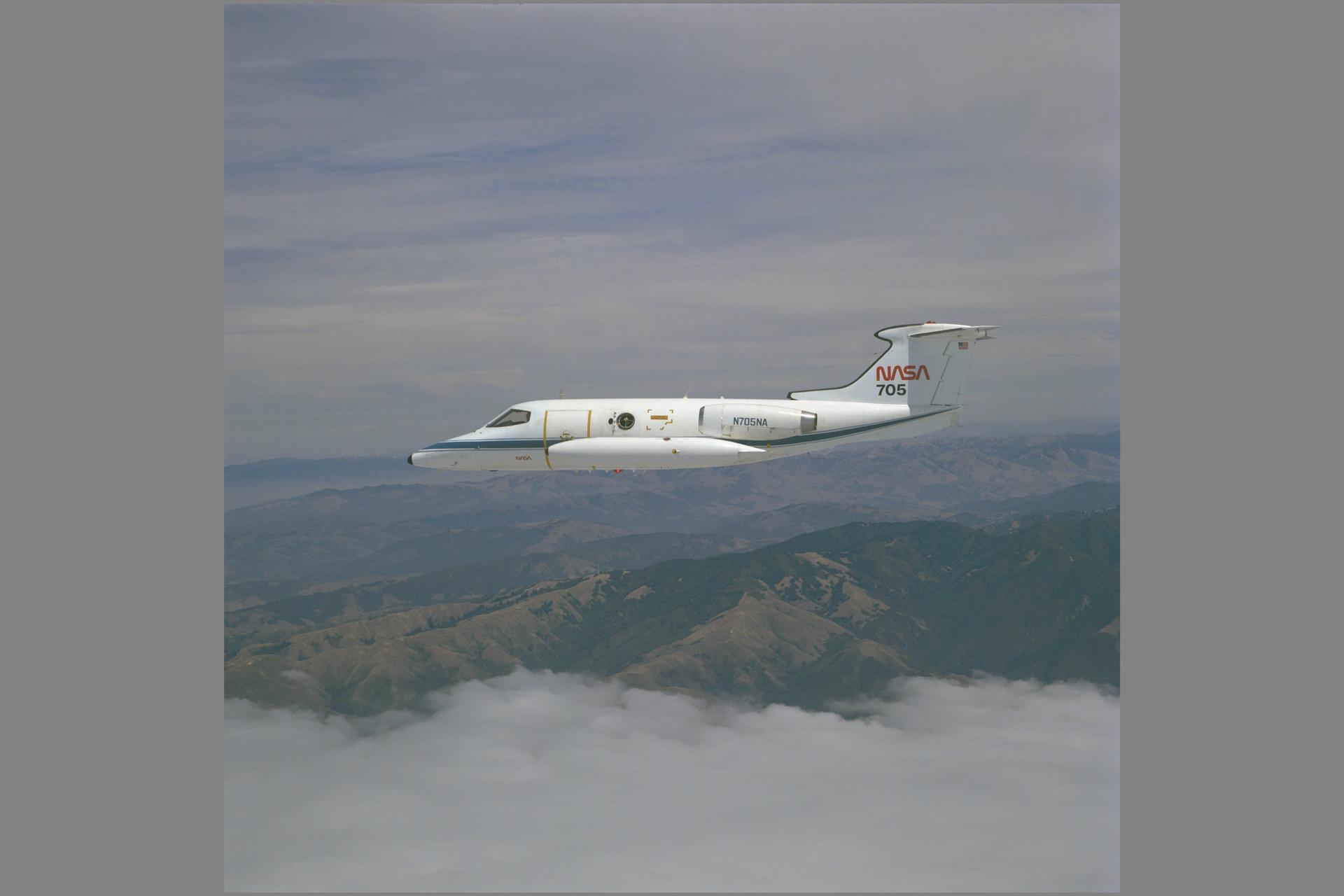
AN UNEXPECTED CHAPTER
A small jet.
A view of the universe.
NASA’s Learjet 24B carried a 30 cm infrared telescope behind a special hatch. Bill Lear’s little business jet found a second life as a flying observatory.
Explore NASA’s archiveChoose a year to explore the history.
1966
The Model 24 arrives
The Model 24 goes around the world.
The Model 24 carried the original idea forward. That May, the first Model 24 circled the globe, establishing or breaking 18 international aviation records.
The May 23–26 journey took just over 50 flying hours.
Smithsonian National Air and Space MuseumThe P-16 connection is a story of design and engineering heritage. The Learjet was developed as a civilian airplane.
OLD LOGBOOKS. A NEW CHAPTER.
Decades of ink.
A new way in.
Old logbooks are part of the rescue, too. The Lear 24’s records helped inspire CyberPlane—a private place to preserve the pages and use AI to find what’s in them. Original records, ready for 2026.
Explore CyberPlane
Every answer has a starting point.
The original page.
Preserve the pages.
Keep the original documents together.
Ask. Then trace.
Follow questions back to source pages.
Keep the judgment human.
AI finds the record. Experience interprets it.
TO THE PEOPLE WHO KNOW THE LEAR 24
NO CREW.
NO COMEBACK.
This could not be done
without you.
WITH GRATITUDE / THE LEAR RESCUE CREW
Tools matter. Manuals matter.
Knowing these airplanes matters most.
To the A&P mechanics with Learjet experience, the old Lear hands, and everyone who kept the 24 flying: thank you. There’s knowledge in your hands, your ear for an unfamiliar sound, and your memory of the last stubborn repair.
AI can help find a record. It cannot bring decades of Learjet experience to the wrench, or pass that knowledge to the person working beside you.
That experience makes this comeback possible.

FIRST RUN / THE SHIRTS ARE IN
Same wings.
Same mission.
The shirts are here. Rescue red, warm ivory, the winged 24, and the airplane that brought us together.
For the crew who keep showing up, rolling up their sleeves, and moving the story along.
 ORIGINAL
CREW ARTWORK
ISSUE / 001
PULL UP A CHAIR. PULL OUT A BOOK.
The Learjet
Library.
The airplane. The inventor.
The world they helped change.
The Lear 24, Bill Lear, and the wider history that shaped this airplane. Books, memoirs, and original research to settle in with.
START HERE / BILL LEAR
The man behind
the name.
Two biographies, an invention, and the airplane that brought it all together.
The people. The airplanes. The story.
HISTORIES & MEMOIRSFrom the research desk.
FREE PAPERS & DIGITAL VOLUMESSelect a volume for its reading brief and sources. Free PDFs open at their official hosts.
Custom library bindings; sourced reading briefs. Amazon links search for the listed edition. Availability varies.
Explore the heritage archivesA LITTLE MORE AIR TIME
Flappy
Learjets.
Old-school jets. One more try.
Take a quick turn at the controls. Pick the Learjet 24, thread the gates, collect your wings, and chase your personal best.
A little arcade detour between days in the hangar.
Play Flappy Learjets (opens the game in a new tab)Free to play · No signup · Opens the game in a new tab
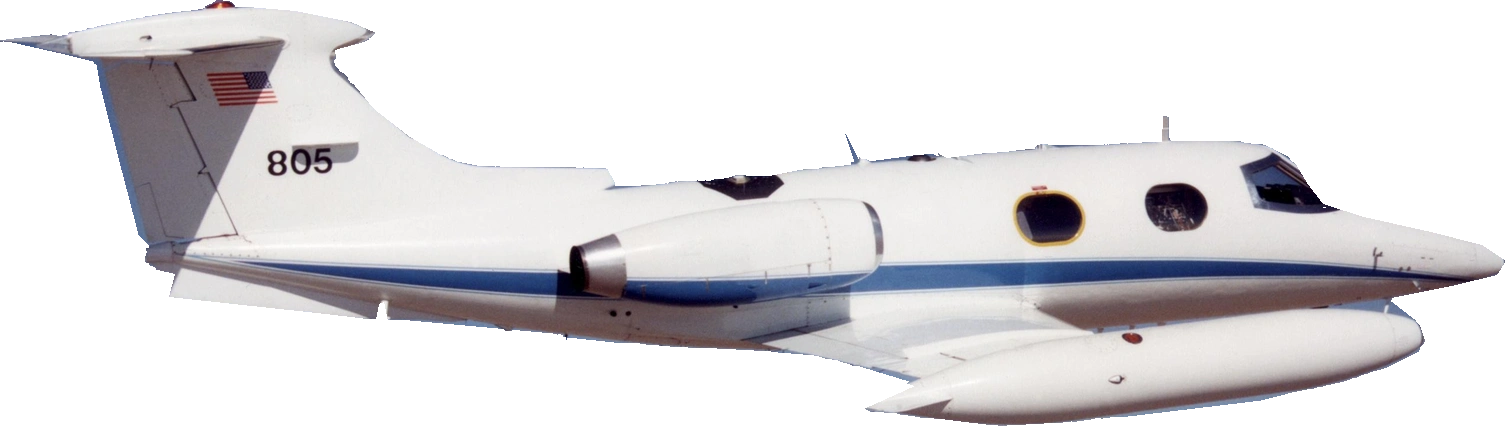
Game aircraft artwork: NASA Learjet 24 · Jim Ross / NASA
From the
source file.
Bill Lear’s papers. The Model 24’s history.
The research behind its XR chapter.
The inventor, in the archive.
The collection guide to Bill Lear’s work in radio navigation and aircraft design, alongside business and personal records. A starting point for following the person behind the airplane.
Before the jet: the autopilot.
The official Collier Trophy roster records the 1949 recognition of Lear’s F-5 autopilot and automatic approach control coupler.
The original Learjet.
The Model 23, its Swiss inspiration, and the first flight that helped change business aviation.
A design that defined an era.
The early Learjet story and the Model 24’s record-setting 1966 journey around the world.
The Dee Howard legacy.
The inventor and company behind the Extended Range modification and other Learjet developments.
Inside the engineering archive.
A guide to original Shannon Engineering records, including 24XR test plans and flight-test reports.
Research checked 21 September 2026. Historical specifications and records describe their own dates; they are not statements of the aircraft’s present condition.
DISPATCHES FROM THE HANGAR
Stay in
the loop.
Lear 24 restoration notes, hangar discoveries,
and the people doing the work.
Your details, your choice.
Signing up saves your email, optional name, consent, and signup date for occasional Lear Rescue updates. We don’t sell the list. New signups receive a private unsubscribe link on screen; keep it to leave the list later.
This is an independent restoration journal. The historical NASA photographs show NASA’s Learjet 24B, not the restoration aircraft; no endorsement is implied. The olive-drab plate is custom project artwork inspired by wartime aircraft data plates.